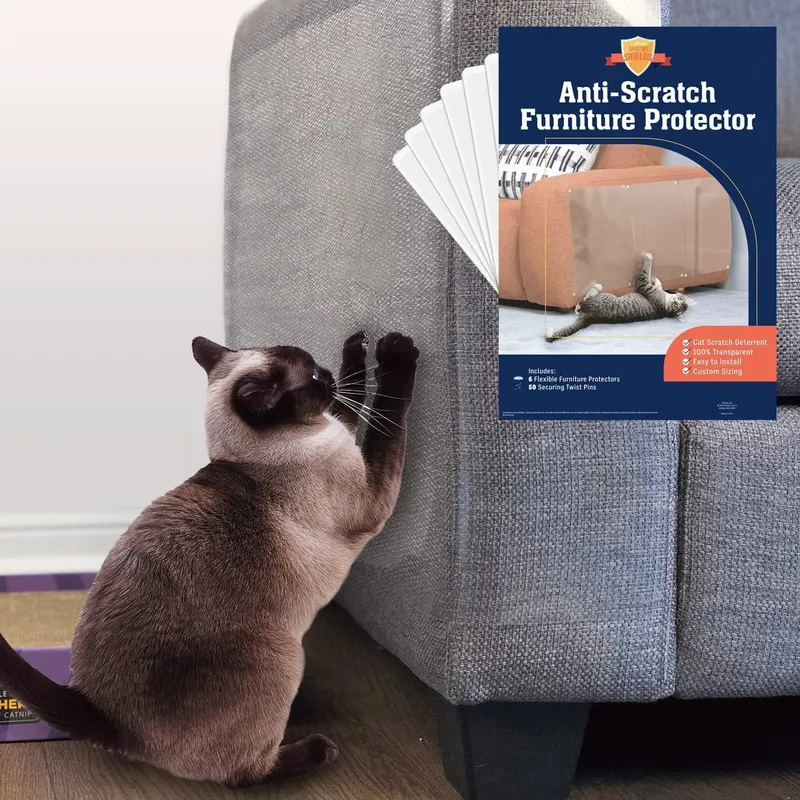
How to Install Cat Scratch Furniture Protectors (So They Actually Stay Put)
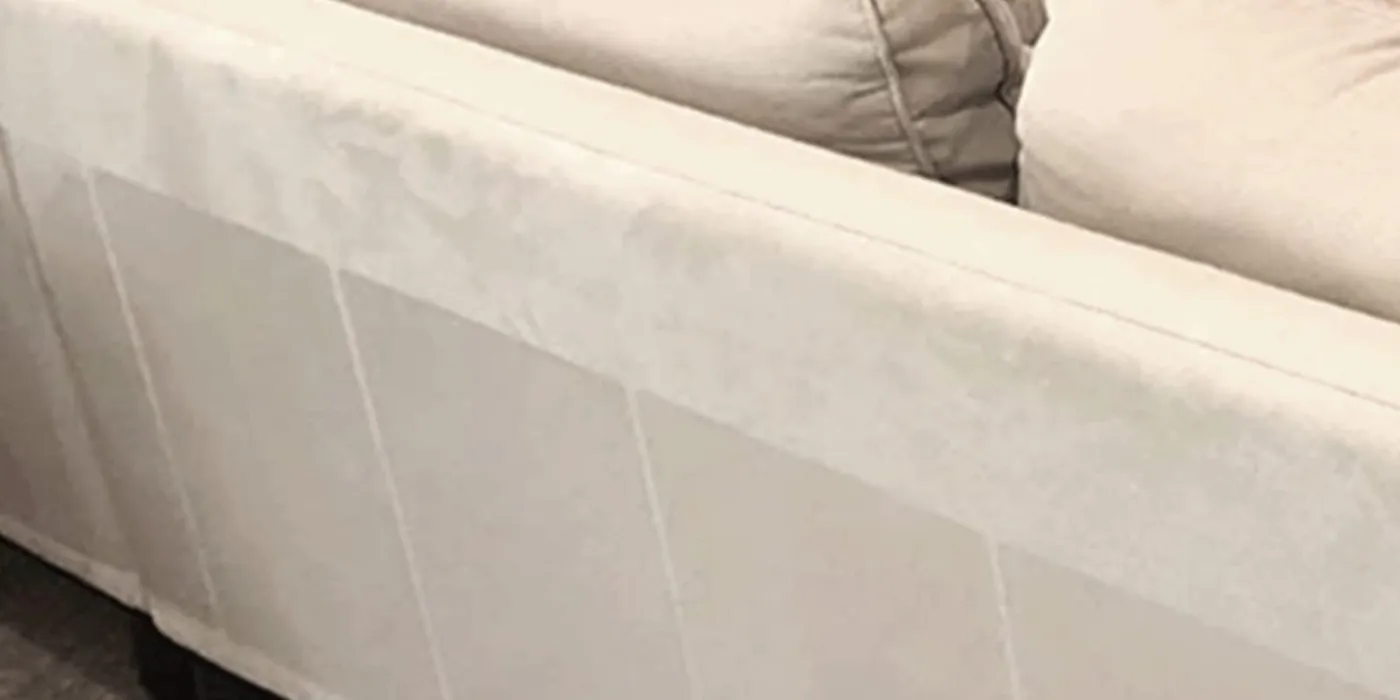
Furniture protectors are simple: a clear sheet goes over the spot your cat scratches, and the smooth surface takes the fun out of it. But the difference between shields that stay up for months and shields that peel at the corners in a week comes down to a few minutes of prep. Here’s how to get it right the first time.
First: check your fabric
Our shields are designed for fabric and upholstered furniture. They hold well on common woven upholstery such as polyester, cotton, acrylic and acetate blends.
They are not recommended for leather, faux leather, velvet or microfiber. The adhesive doesn’t grip those surfaces properly, and delicate finishes can be marked.
Whatever your fabric, test first. Stick a small piece on a hidden area — the back of the sofa near the floor, or under a cushion — and leave it for a day. Check that it holds and that you’re happy with how the fabric looks when you peel it off. Thirty seconds of testing beats any amount of guessing.
What’s in the pack
- Clear, flexible XL sheets, each 17” × 12”, with self-adhesive backing
- 50 twist pins for extra hold (optional)
You’ll also want a pair of sharp scissors, a lint roller or vacuum, and a dry cloth.
Step by step
1. Map the scratch zones
Look for pulled threads and fuzzy patches — your cat has already told you where the shields need to go. The usual suspects are the front and outer sides of the arms, the back corners, and the lower front edge. Cover the whole zone, plus a little extra on every side. A cat who finds a bare strip next to the shield will happily use it.
2. Clean the surface
This is the step people skip, and it’s the one that matters most. Adhesive sticks to whatever it touches first — and if that’s a layer of cat hair and dust, the shield is attached to the fluff, not the furniture. Vacuum or lint-roll the area thoroughly, make sure the fabric is completely dry, and let it come to room temperature if the room has been cold.
3. Cut to fit
Hold a sheet up to the area before you peel anything. The sheets cut easily with household scissors, so you can trim them to follow a curved arm, fit a narrow panel, or work around piping and seams. A few tips:
- Round the corners of any piece you cut. Rounded corners are much harder for a curious paw to lift than sharp ones.
- For a wrap-around arm, it’s often cleaner to use two pieces that meet at the edge than to force one sheet around a tight curve.
- Keep the offcuts. Small pieces are perfect for the corner of a dining chair or the edge of an ottoman.
4. Peel and press
Peel the backing off and position the top edge first, then smooth downward with your palm, working from the center out to the edges. Press firmly over the whole surface, then go around the edges once more. Take your time here — firm, even pressure is what sets the adhesive.
5. Add twist pins where it counts
The twist pins are optional, but they’re the secret to a shield that survives a determined scratcher. Add them at the corners and along the top edge, where a cat’s weight pulls hardest. Push the pin through the sheet and twist it into the upholstery until the head sits flat against the shield.
Use pins on upholstered, padded areas only, and test one somewhere discreet first if you’re unsure how your fabric will take it.
A safety note: twist pins are small parts. Keep spare pins stored away from young children, and check now and then that installed pins are still snug.
How many sheets do you need?
Each sheet covers 17” × 12”. As a rough guide:
- An armchair or recliner, or just the two front arms of a sofa: a 6 pack usually does it.
- A standard sofa with scratching on the arms and back corners: look at the 10 pack or 12 pack.
- A sectional, several pieces of furniture, or a multi-cat home: the 18 pack gives you room to cover everything and keep spares.
When in doubt, size up. Scratch zones tend to be a little bigger than they look, and spare sheets are handy when you bring home a new chair.
Living with your shields
- Cleaning: wipe with a soft, damp cloth. That’s it.
- If an edge lifts: press it back down and add a twist pin at that spot.
- Removing: peel slowly from one corner, keeping the sheet close to the fabric rather than pulling straight out. If you tested first, you already know how your fabric responds.
Don’t forget the other half
Shields make the couch boring. To make the change stick, your cat also needs somewhere exciting to scratch. Put a sturdy post right next to the protected spot and reward your cat for using it — here’s how to choose a scratching post your cat will actually use.
And if you’re curious what’s going on in your cat’s head through all of this, start with why cats scratch furniture in the first place. Spoiler: it isn’t personal.